an account. You can:
Access your saved cars on any device.
Receive Price Alert emails when price changes,
new offers become available or a vehicle is sold.
Fuel Facts: Grades, Ethanol, and Your Engine
With so many options at the pump, choosing the right fuel can feel like a guessing game. However, the liquid you put into your tank is the lifeblood of your vehicle. Understanding the nuances between octane ratings and ethanol content is the first step in protecting your investment for years to come.
1. The Octane Rating: More Than Just a Number
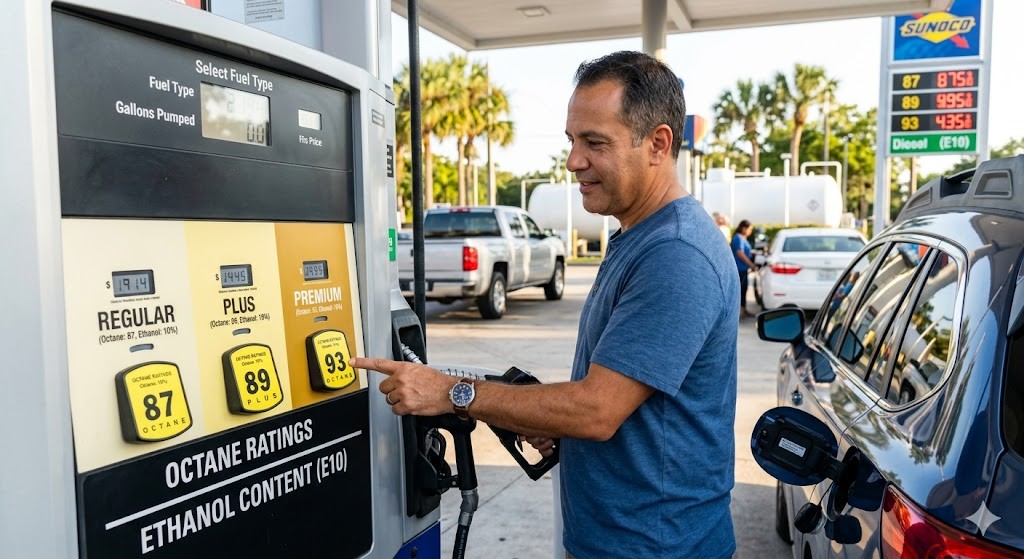
The numbers 87, 89, and 93 aren’t quality scores—they are measures of octane, which represents the fuel’s ability to resist “knocking” (premature ignition in the cylinders).
• Regular (87): Sufficient for most standard engines.
• Mid-Grade (89-90): Often used in older performance vehicles.
• Premium (91-94): Required for high-compression or turbocharged engines. Using lower octane in these engines can lead to reduced performance and long-term internal wear.
2. Decoding Ethanol: E10 vs. E15
Most modern fuel is a blend of petroleum and ethanol (a plant-based alcohol). While beneficial for emissions, it’s important to know what your car can handle.
• E10 (Standard Gasoline): Containing 10% ethanol and 90% gasoline, E10 is the universal standard. Almost every gasoline-powered vehicle manufactured in the last several decades is designed to run on this blend without issue.
• E15 (Unleaded 88): E15 contains 15% ethanol. While often more affordable, it requires caution:
• Safe for: Cars, SUVs, and light trucks built in 2001 or newer.
• Avoid for: Motorcycles, boats, heavy-duty trucks, or small engines (like lawnmowers).
These fuel systems can be corroded by the higher alcohol content.
3. Long-Term Protection Strategies
To keep your fuel system pristine and your engine running smoothly until you hit the 200,000-mile mark, consider these expert tips:
• Prioritize “TOP TIER™” Detergents: Not all gas is created equal. Brands certified as TOP TIER™ use higher levels of detergents that actively clean your engine’s fuel injectors and intake valves as you drive, preventing carbon buildup.
• Manage “Phase Separation”: Ethanol attracts water. If a vehicle sits for too long, the water and ethanol can separate from the gasoline and sink to the bottom of the tank. Use a fuel stabilizer for storage.
• Keep the Tank Above a Quarter: Your fuel pump is cooled by the gasoline surrounding it. Running on empty forces the pump to work harder and hotter.
Closing Remarks
Modern gasoline is a marvel of engineering, but it requires a basic level of attention to ensure your vehicle performs at its peak. By choosing the correct octane, being mindful of ethanol compatibility, and following simple maintenance habits, you are doing more than just filling a tank—you are safeguarding your car’s future. If you ever have questions about your specific model’s requirements always refer to your Owner’s Manual or contact your Manufacturer.